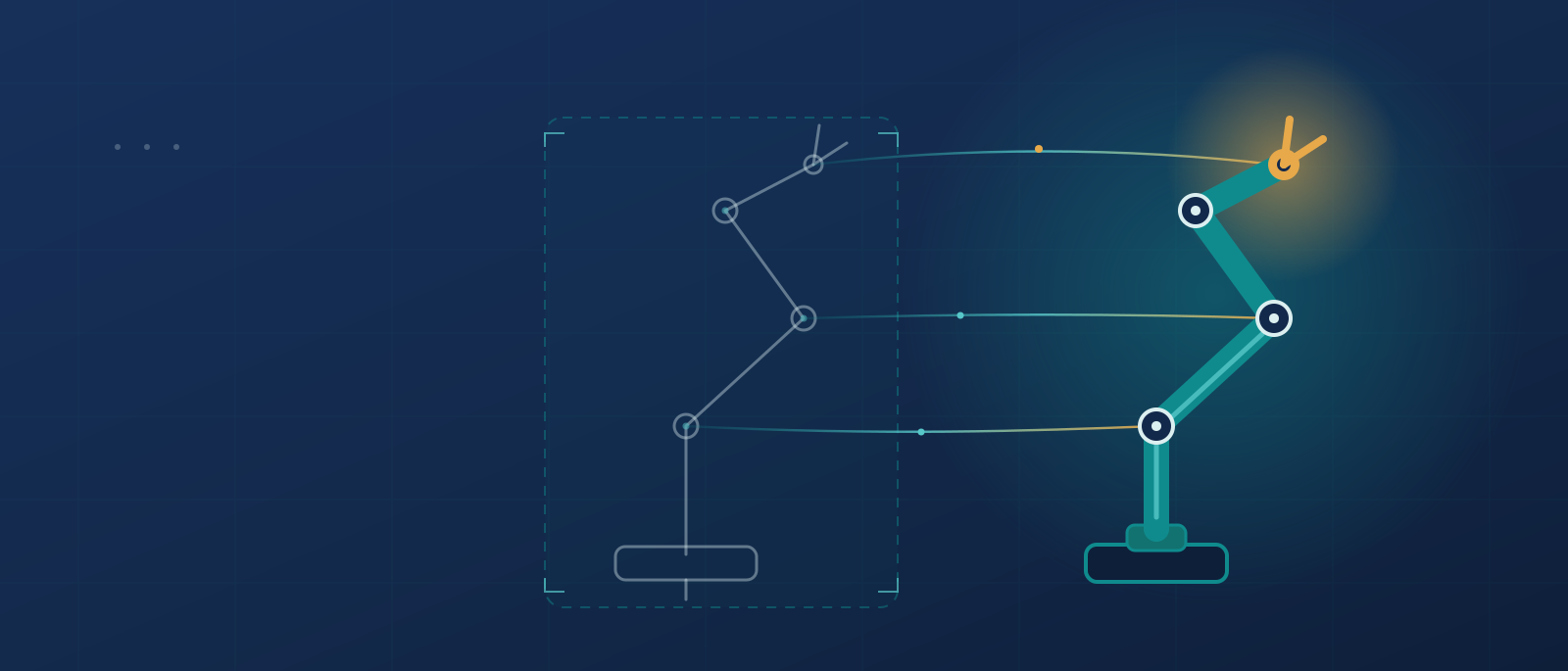
| Robotics simulation is the practice of training, testing, and validating robots inside physics based virtual worlds before they ever move in the real one. The best programs treat simulation as a scale layer that multiplies a smaller set of real world recordings, not as a replacement for them. |
This guide explains what robotics simulation is, how it works, where it fits alongside synthetic data for robotics and automotive simulation, and how to judge whether your simulation pipeline will actually transfer to hardware. It builds on our 2026 guide to robotics training data and our primer on how robots learn, and it is written for machine learning and robotics engineers, autonomy leads, and data teams deciding how to balance simulated and real world data.
At a glance
| Question | Short answer |
|---|---|
| What is robotics simulation? | Training and testing robots in physics based virtual environments before real deployment. |
| Why does it matter? | It lowers cost and risk, and it generates rare scenarios that are hard to capture in the real world. |
| What are the main tools? | NVIDIA Isaac Sim, Gazebo, MuJoCo, CoppeliaSim, Webots, PyBullet, and CARLA for driving. |
| Is simulation data enough? | Rarely on its own. Most reliable systems combine simulated data with real world and human demonstration data. |
| What is the sim-to-real gap? | The performance drop when a policy trained in simulation meets messy real world conditions. |
| How much does it cost? | Open-source engines are free to run; total cost comes from compute, engineering time, and validation. |
What is robotics simulation?
Robotics simulation is a physics based digital representation of a robot and its surroundings, used to train and validate behavior in software. NVIDIA describes it as a way for developers to virtually train, test and validate robots in physics based digital representations of the real world, so that AI models and control software can be developed without a physical robot in the early stages
A simulator models three things at once. It models physics, so gravity, friction, joints, and contact forces behave believably. It models sensing, so cameras, LiDAR, depth, and force sensors produce realistic readings. And it models the scene, so objects, lighting, and clutter resemble the target environment. MathWorks frames the same idea through Model-Based Design and the digital twin, letting engineers create virtual models of robots and their environments to test algorithms without the need for physical prototypes.
Why robotics simulation matters
The value of simulation comes down to cost, safety, and coverage. Physical trials are slow, expensive, and sometimes dangerous. A grasping policy that fails in software costs nothing; the same failure on a real arm can damage hardware or a product. Simulation lets teams run many trials in parallel and catch problems before they reach a workshop floor.
Coverage is the part teams underrate. Some situations are rare, unsafe, or almost impossible to stage on demand: a pedestrian stepping out at dusk, a warehouse spill, a part that arrives scratched. In driving, NVIDIA notes that simulation lets teams generate millions of scenario variations, including conditions that have never occurred in the real world, to test safety before a single mile is driven . That long tail is exactly where real robots fail, and it is where a virtual world earns its keep.
| MARKET SNAPSHOTOne market research estimate values the robotic simulator market at USD 820 million in 2025, rising to roughly USD 3.09 billion by 2035 at a 14.2% compound annual growth rate (Precedence Research). Treat any single market figure as directional rather than exact. |
How robotics simulation works
At a high level, a simulation program runs through six repeatable stages.
- Build the scene. Model the robot, the environment, and the objects it will interact with, often using open standards such as OpenUSD.
- Configure physics. Set mass, friction, joint limits, and contact models so motion and collisions behave realistically.
- Add sensors. Attach virtual cameras, depth, LiDAR, and force sensors that output data in the same format the real robot uses.
- Generate data or train. Run the robot through tasks to collect labeled synthetic data, or train a control policy directly through reinforcement learning.
- Randomize. Vary lighting, textures, clutter, and camera angles so the model does not overfit to one perfect scene.
- Transfer and validate. Deploy the policy on hardware and measure the sim-to-real gap, then feed failures back into the next iteration.
Two ideas make this loop work. The first is domain randomization, which deliberately varies the look and layout of the scene so a model learns the task rather than one exact appearance. The second is sim-to-real transfer, the discipline of closing the gap between simulated and physical performance. NVIDIA’s Isaac Lab, for example, is an open-source framework that uses GPU parallelization to train and transfer policies at scale . Real demonstrations, such as teleoperation data collected from human-controlled robots, give these policies a grounded starting point that pure simulation cannot provide.
Synthetic data for robotics: the scale layer
Synthetic data for robotics is machine generated training data, produced by rendering scenes and simulating sensors instead of recording the real world. Synthetic data for robotics offers scale with perfect labels: every pixel, bounding box, and pose is known exactly, because the simulator created it. Some perception models have been trained largely this way. NVIDIA reports that its CabiNet collision model used 650,000 procedurally generated scenes to generalize to real environments, and that Motion Policy Networks were trained on more than 700 million simulated point clouds .
The catch is realism. Synthetic data is only as useful as its resemblance to the world the robot will actually see. When textures, physics, or sensor noise drift from reality, a model can look excellent in software and stumble on hardware. This is why leading teams anchor synthetic data in real recordings rather than generating scenes from scratch. That is the approach behind Graveiens AI’s simulation and synthetic data work, which multiplies a smaller set of consent-backed real recordings into many domain randomized variations, and it complements first-person datasets described in our guide to egocentric video.
Automotive simulation and autonomous vehicles
Automotive simulation is the highest stakes application of these ideas. Self-driving systems cannot safely learn every hazard on public roads, so they rehearse in virtual traffic, which makes automotive simulation a safety tool as much as a training tool. CARLA, an open-source driving simulator, is widely used in research and industry for this purpose, and commercial platforms from rFpro, Applied Intuition, and NVIDIA extend it toward production validation.
Modern automotive simulation is moving from hand-built maps toward reconstructed reality. NVIDIA rebuilds real driving footage into 3D scenes with neural reconstruction, then uses world foundation models to vary weather, lighting, and behavior, and runs closed-loop tests where the vehicle’s own actions change what happens next . The same grounding principle applies to automotive simulation as to manipulation: a driving simulation is trustworthy when it is anchored in real sensor data, which is why perception stacks still depend on carefully collected and labeled road data. For a plain-English primer on the wider system, see our guide to AI in self-driving cars.
Robotics simulation software compared
There is no single best simulator. The right choice depends on your robot, your goal, and whether you need photorealistic rendering or fast physics. The table below compares the most common options.
| Simulator | Best for | Strengths | Limitations | When to choose |
|---|---|---|---|---|
| NVIDIA Isaac Sim | Photorealistic perception and synthetic data | High-fidelity rendering, sensor sim, GPU scale, OpenUSD | Heavy GPU needs, steeper setup | You need realistic images and large synthetic datasets |
| Gazebo | ROS-based mobile robots and research | Mature ROS integration, free, large community | Rendering is basic, less photorealism | You work in ROS 2 and need reliable physics |
| MuJoCo | Reinforcement learning and control | Fast, accurate contact physics, free | Limited photorealism, smaller asset ecosystem | You train locomotion or manipulation policies |
| CoppeliaSim / Webots | Education and prototyping | Easy to learn, cross-platform, many robot models | Less suited to large-scale learning | You prototype quickly or teach robotics |
| PyBullet | Lightweight research and RL | Simple, open-source, quick to script | Basic rendering and sensors | You need a fast, no-cost physics sandbox |
| CARLA | Autonomous driving and ADAS | Purpose-built for AV, open-source, scenario tools | Driving-specific, resource heavy | You develop or validate self-driving systems |
The nuance matters more than any ranking. Isaac Sim is usually stronger when photorealistic perception data is the goal, while MuJoCo is often preferable when you care about fast, accurate contact for control learning. A hybrid stack is common: MuJoCo for policy training, Isaac Sim for perception and synthetic data, Gazebo for ROS integration testing. The trade-off is always fidelity against speed and engineering effort.
The Graveiens SCALE framework for simulation readiness
Most simulation programs fail for the same reason: they optimize how good the demo looks in software instead of how well it transfers to hardware. The SCALE framework is a simple scorecard for judging readiness before you commit budget. Rate each dimension from 1 to 5. A program scoring below 3 on any single dimension is a transfer risk, regardless of its total.
| Dimension | What to evaluate | Score 1 to 5 | |
|---|---|---|---|
| S | Scene fidelity | Does the virtual environment match the real target setting, not a generic room? | |
| C | Coverage | Are rare and unsafe long-tail events represented through scenario variation? | |
| A | Anchoring | Is synthetic data grounded in real recordings rather than invented from scratch? | |
| L | Label integrity | Are ground-truth labels verified by people, not trusted blindly because the sim made them? | |
| E | Evaluation on hardware | Is the sim-to-real gap measured on real robots, with failures fed back in? |
| Key takeaway: simulation scales data, but people still decide whether that data is trustworthy. Anchoring and label integrity are where teams cut corners and where sim-to-real programs quietly break. |
Real-world examples
The following examples are illustrative composites based on common industry patterns, not specific customer results.
Illustrative example one: warehouse picking. A team trains a grasping policy entirely on rendered bins and reaches high accuracy in software. On hardware, it fails on reflective and deformable items the renderer never captured well. Fixing it means anchoring the synthetic scenes in real captures of the actual products, then re-randomizing. The lesson is that anchoring, the A in SCALE, was the missing dimension.
Illustrative example two: ADAS perception. A driving team uses automotive simulation to generate night, rain, and low-sun scenarios that rarely appear in their real logs. The simulated data closes gaps in the long tail, but the team still validates against real road data before release, because closed-loop behavior in reactive traffic is what ultimately matters.
Costs and ROI
Robotics simulation carries a misleading price tag. The software can be free: Gazebo, MuJoCo, PyBullet, and CARLA are open-source. The real cost sits in four places.
- Compute. Photorealistic rendering and large-scale training need capable GPUs, whether on-premise or in the cloud.
- Engineering time. Building faithful scenes, sensor models, and randomization pipelines is skilled, ongoing work.
- Real data for anchoring. High-quality synthetic data for robotics still depends on real recordings to stay grounded, whether that is data collection sourced to spec or first-person egocentric video captured on-site.
- Validation. Measuring and closing the sim-to-real gap on hardware is a recurring expense, not a one-time step.
A useful way to think about return is cost avoided. If simulation prevents even a handful of hardware failures, damaged prototypes, or unsafe field incidents, it often pays for itself. The clearest wins come when simulation is used to expand the long tail cheaply, while real data is reserved for anchoring and final validation.
Common mistakes
Mistake one is treating synthetic data as a full replacement for real data. It happens because simulated results look clean and complete. It matters because models overfit to the simulator and fail on hardware. Prevent it by anchoring synthetic scenes in real recordings and always validating on real robots.
Mistake two is skipping domain randomization. It happens when a single, carefully built scene produces impressive early numbers. It matters because the model learns that exact scene rather than the task. Prevent it by varying lighting, texture, clutter, and viewpoint from the start.
Mistake three is trusting auto-generated labels without review. It happens because the simulator produces labels for free. It matters because rendering artifacts and edge cases silently corrupt training data. Prevent it with human review of labels and gold-set audits, the data annotation and labeling discipline behind reliable data pipelines.
Best practices
- Start from a real recording, then scale it with simulation rather than the reverse.
- Randomize aggressively across appearance and physics to force generalization.
- Measure the sim-to-real gap continuously on hardware, not once at the end.
- Keep humans in the loop for label validation and edge-case review.
- Match the simulator to the job, and combine tools when one cannot do everything.
- Document assumptions so results stay reproducible as scenes evolve.
How Graveiens AI approaches simulation and data
Graveiens AI treats simulation as the scale layer on top of real, consent-backed human data rather than a substitute for it. The company multiplies a smaller set of real recordings into many domain randomized variations using industry-standard tools such as NVIDIA Isaac Sim and MuJoCo, and it pairs that scale with expert human review targeting 98% post-QA accuracy. In practice that means the same team that runs simulation and synthetic data also owns the real data that grounds it, so anchoring and label integrity are handled together rather than bolted on afterward.
Frequently asked questions
What is robotics simulation in simple terms?
Robotics simulation is testing and training a robot in a physics based virtual copy of the real world. Engineers build a digital model of the robot and its environment, then run many trials in software to develop control policies and generate training data before touching real hardware. It reduces cost and risk and makes rare situations easy to rehearse.
How does robotics simulation work?
A simulator models physics, sensors, and the scene together. Teams build the environment, configure physics such as friction and contact, attach virtual sensors, then either train a policy or generate labeled synthetic data. Domain randomization varies the scene to prevent overfitting, and sim-to-real testing measures how well the result transfers to a physical robot.
Is synthetic data for robotics enough to train a robot on its own?
Usually not. Synthetic data offers scale and perfect labels, but it drifts from reality in texture, physics, and sensor noise. The most reliable systems anchor synthetic data in real recordings and validate on hardware. Simulation is best seen as a multiplier for real data, not a replacement.
What is the sim-to-real gap?
The sim-to-real gap is the performance drop a robot shows when a policy trained in simulation meets real world conditions. It comes from differences in physics, appearance, and sensor behavior. Teams reduce it with domain randomization, higher fidelity scenes, real data anchoring, and repeated hardware testing.
How is automotive simulation different from general robotics simulation?
Automotive simulation focuses on driving: traffic, road layouts, weather, and safety-critical scenarios for autonomous vehicles and ADAS. It relies heavily on scenario variation and closed-loop testing, where the vehicle’s actions change the scene. Tools like CARLA are purpose-built for it, while general robotics simulators target arms, mobile robots, and manipulation.
How much does robotics simulation cost?
The simulation software itself is often free, since Gazebo, MuJoCo, PyBullet, and CARLA are open-source. Real cost comes from GPU compute, engineering time to build faithful scenes, real data for anchoring, and ongoing hardware validation. Budget for these four rather than assuming free tools mean a free program.
Which robotics simulation software is best?
There is no universal best. Isaac Sim leads on photorealistic perception and synthetic data, MuJoCo on fast control learning, Gazebo on ROS integration, and CARLA on autonomous driving. Many teams combine them. Choose based on whether you need rendering fidelity, physics speed, ROS support, or driving-specific tooling.
Do you still need real data if you use simulation?
Yes. Simulation scales data and covers the long tail, but real recordings keep it grounded and human review keeps labels trustworthy. Real data is what anchors synthetic scenes and validates final performance, which is why the strongest programs blend both rather than choosing one.
About the authors
| This article was produced by the Graveiens AI editorial team and reviewed by a subject-matter reviewer on the physical AI data team. Graveiens AI is an ISO 9001:2017 certified, human-in-the-loop AI data services company founded in 2017, working with 350+ global clients and a network of 700+ experts and subject-matter reviewers. Learn more on our about page. |
Conclusion
Robotics simulation is the fastest, safest way to train and test robots at scale, but it works best as a multiplier for real world data, not a substitute for it. The programs that transfer to hardware are the ones that anchor synthetic data in real recordings, randomize aggressively, keep people in the loop for label quality, and measure the sim-to-real gap on real robots. Use the SCALE framework to check readiness before you invest, and match your tools to the job.
If you are building physical AI and need simulation grounded in real, consent-backed human data with expert review, Graveiens AI can help. Explore our simulation and synthetic data services to see how we turn a small set of real recordings into a scaled, hardware-ready training set.
Sources
- NVIDIA, What Is Robotics Simulation, https://blogs.nvidia.com/blog/what-is-robotics-simulation/
- MathWorks, What Is Robot Simulation, https://www.mathworks.com/discovery/robot-simulation.html
- NVIDIA, Simulation for Robotaxis and Autonomous Vehicles, https://www.nvidia.com/en-us/solutions/autonomous-vehicles/simulation/
- Precedence Research, Robotic Simulator Market, https://www.precedenceresearch.com/robotic-simulator-market
- CARLA Simulator, https://carla.org/

Jitendra Choubay is the CEO & Founder of Graveiens AI, leading a human-in-the-loop data services team that helps AI builders with data collection, annotation, consent-backed voice data, transcription and LLM fine-tuning. He writes on building better, ethically sourced AI training data.
Get the next Graveiens AI article
Expert notes on AI data, annotation, LLMs and eLearning — no spam, unsubscribe anytime.
Need AI Development? Data Annotation? eLearning?
Talk to Graveiens AI about data collection, annotation, voice data, RLHF/SFT, LLM evaluation and AI training data — invoiced only on approved work.
Contact Graveiens AI