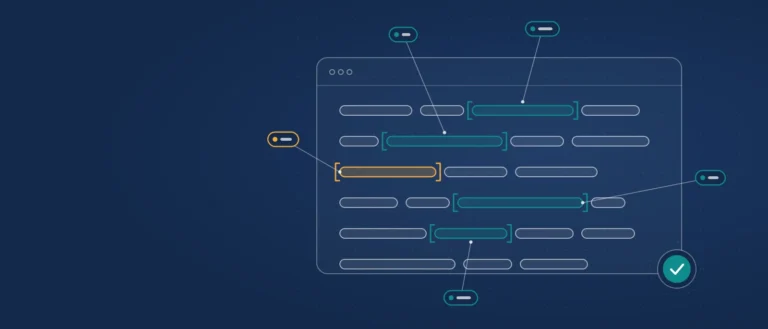
Physical AI is artificial intelligence that perceives, reasons, and acts in the real world through robots and machines, and it learns almost entirely from robotics training data: the real, simulated, and human demonstration data that teaches a machine how to move, grasp, and complete tasks. In other words, a robot brain is only as capable as the examples it has seen. This guide explains what physical AI is, why the data behind it matters more than the model, the main types of robotics training data and when each one wins, the benchmarks and datasets that define the field in 2026, and a practical, repeatable way to plan your own data mix.
If you are deciding how to collect or buy data for a robot, an autonomous system, or an embodied agent, read the At a glance answers first, then use the comparison table and the Data Readiness Matrix further down to make the call.
At a glance: physical AI and robotics training data
| Question | Short answer |
|---|---|
| What is physical AI? | AI that operates in and interacts with the physical world through sensors and actuators, not just software, according to IBM’s definition. |
| What is robotics training data? | The demonstrations, sensor logs, and simulated scenarios that teach a robot policy how to perceive and act. It is the fuel for physical AI. |
| Why does the data matter so much? | Model architectures are increasingly shared and open. For many teams, the quality, diversity, and realism of robotics training data is the deciding factor in whether a robot generalizes. |
| What are the main data types? | Real-world and egocentric capture, human teleoperation, simulation and synthetic data, world models, and cross-embodiment web-scale datasets. |
| Who popularized the term? | Nvidia CEO Jensen Huang is widely credited with popularizing physical AI, which he called the next ChatGPT moment at CES 2026. |
| How should I choose a data mix? | Match the data source to task dexterity and environment diversity. Most production systems blend simulation for scale with real human demonstrations for realism. |
Table of contents
• What is physical AI?
• Why robotics training data decides whether physical AI works
• The types of robotics training data
• Comparison table: robotics training data sources
• When each data source wins: a nuanced view
• World models AI and the synthetic data question
• Embodied AI datasets and benchmarks that matter in 2026
• The Graveiens Data Readiness Matrix
• How to build a robotics training data pipeline: a checklist
• A worked example: from brittle demo to reliable policy
• How high-quality physical AI data is actually built
• Frequently asked questions
• About the authors
• Conclusion
• Sources
What is physical AI?
Physical AI is artificial intelligence that senses, understands, and acts in the real world, closing the loop between perception and action through robots, vehicles, and machines. IBM defines it as “artificial intelligence (AI) systems that operate in and interact with the physical world, rather than existing only in software or digital environments,” combining AI models with “sensors, actuators, and other control systems that allow models to act upon real-world environments.”
The contrast with generative AI is useful. A chatbot predicts the next token in a sentence, and a mistake produces an awkward paragraph. A physical AI system predicts the next action for a body with mass and momentum, and a mistake can knock a cup off a table or stall a warehouse line. That is why physical AI depends on grounded, physically accurate examples rather than text scraped from the open web.
Generative models are not the rival here. They are the enabler. Foundation models gave robots a common sense starting point about objects and language, and the current wave of vision-language-action (VLA) models extends that reasoning into motor control. The missing ingredient, and the hard part, is the robotics training data that maps what a robot sees to what it should do.
Interest in the field accelerated sharply in early 2026. Nvidia CEO Jensen Huang, who is widely credited with popularizing the term, told audiences around CES 2026 that a ChatGPT moment for physical AI was coming and spoke of a future with a billion robots. Whether or not that number lands, the direction is clear: the race in robotics has shifted from building bigger models to building better data.
Why robotics training data decides whether physical AI works
For many robotics teams, robotics training data is now the primary bottleneck, not model size or compute. Language models had the entire internet to learn from. Robots have no equivalent corpus of physical experience, so the data has to be created deliberately, action by action.
Three properties separate data that produces a reliable robot from data that produces an impressive demo. Coverage comes first: a policy trained only on tidy lab kitchens fails in a cluttered real one, so diversity of environments, objects, and edge cases is what lets a physical AI model generalize instead of memorize. Fidelity comes second: physical AI has to respect friction, contact forces, and timing, and data that is slightly wrong about physics teaches habits that break on real hardware, the gap practitioners call the sim-to-real problem. Provenance comes third, and it is increasingly a legal requirement rather than a nicety: human demonstration and egocentric video capture real people and real spaces, so consent, licensing, and a clear audit trail decide whether you can actually deploy a model trained on that data. Quality control matters as much as quantity, which is why serious programs pair collection with rigorous data annotation and validation before anything reaches a training run.
The types of robotics training data
There are five main types of robotics training data, and modern physical AI systems almost always combine several rather than betting on one. Each answers a different question about how an embodied AI system should behave.
Real-world and egocentric capture
This is human first-person video and sensor data recorded as people do real tasks, often through head-mounted cameras that see the world roughly the way a robot’s sensors would. Egocentric capture is prized for embodied AI because it records natural hand-object interaction, gaze, and the exact sequence of task steps in messy real settings. Programs like structured egocentric video data collection gather this first-person footage across kitchens, warehouses, and workshops with consent built in, which is what makes it usable for imitation learning and VLA training.
Human teleoperation
Here a person remotely operates the actual robot, and every joint movement is recorded as a demonstration on the target hardware. Teleoperation produces the cleanest possible action labels because the data lives in the robot’s own body, which is why it anchors many manipulation datasets. It is slower and more expensive per hour than video, but the quality is hard to beat. Our deeper explainer on how teleoperation teaches robots real work walks through the tradeoffs.
Simulation and synthetic data
Physics simulators generate labeled scenarios at massive scale, running thousands of virtual robots in parallel to practice a skill millions of times. Simulation is cheap, safe, and infinitely repeatable, and it is excellent for teaching embodied AI locomotion, navigation, and reinforcement learning. Its weakness is the reality gap: subtle differences between simulated and real physics, textures, and sensor noise mean sim-trained policies usually need real data to fine-tune.
World models
A world model is an AI system that has learned the dynamics of the physical world, including geometry, motion, and physics, from large amounts of real data, and can then generate realistic, physics-aware scenarios on demand. World models blur the line between simulation and reality by producing synthetic yet believable video and interactions to train and evaluate robots.
Cross-embodiment and web-scale datasets
These are large pooled datasets that combine demonstrations from many different robots and labs so a single policy can learn transferable skills. They give an embodied AI model breadth it could never get from one robot in one building, and they underpin the recent generation of general-purpose robot foundation models.
Comparison table: robotics training data sources
The table below compares the main robotics training data sources across the factors that actually drive a physical AI build-or-buy decision. Use it as a quick reference, then read the nuanced section that follows, because the right answer is almost always a blend.
| Data source | Action-label fidelity | Scale and cost | Real-world realism | Best for | Main limitation |
|---|---|---|---|---|---|
| Real-world egocentric video | Medium (needs retargeting) | High volume, moderate cost | Very high | Imitation learning, VLA models, task understanding | Human body differs from robot body |
| Human teleoperation | Very high (native robot actions) | Low volume, high cost per hour | High | Precise manipulation, dexterous grasping | Slow and expensive to scale |
| Simulation and synthetic | High within the simulator | Very high volume, very low cost | Medium (reality gap) | Locomotion, navigation, reinforcement learning | Sim-to-real transfer required |
| World models AI | High and controllable | High volume, moderate cost | High and improving | Scenario generation, policy evaluation, rare edge cases | Newer, still maturing in 2026 |
| Cross-embodiment datasets | Mixed (varies by contributor) | Very high volume, shared cost | High but heterogeneous | General skills, foundation model pretraining | Inconsistent formats and quality |
An HTML version of this comparison table is included in the SEO package so it renders cleanly on publish.
When each data source wins: a nuanced view
No single source is best, and any vendor who tells you otherwise is selling one thing. Each data type is strongest for a specific job, and the leading physical AI programs deliberately layer them.
Simulation wins when the skill is about dynamics and repetition rather than fine contact: walking, balancing, drone flight, and navigation. You can practice a billion steps overnight, and the physics of a falling body is well understood, so the reality gap is manageable. It struggles with rich contact tasks like folding cloth or plugging in a cable, where real friction and deformation are hard to model.
Teleoperation wins when you need precision on the exact robot you will deploy, because the action labels are native and unambiguous. It suits a narrow, high-value manipulation skill, and it is the wrong choice when you need thousands of hours of variety, because the cost curve is brutal.
Egocentric and real-world capture wins when the goal is generalization to human environments. First-person human video is far cheaper to gather at scale than teleoperation and captures the long tail of real objects and clutter, which is exactly what embodied AI needs to leave the lab. The tradeoff is that a human hand is not a robot gripper, so the data must be retargeted, and quality control is essential.
World models AI sits in between, and its role is growing fastest, letting teams generate rare or dangerous scenarios on demand and evaluate embodied AI policies in a controllable synthetic world before touching hardware.
In practice the hybrid pattern dominates: pretrain broadly on cross-embodiment and simulated data for scale, then fine-tune on curated real human demonstrations and egocentric video for realism. The blend, not the single source, is the strategy.
World models AI and the synthetic data question
World models AI is the fastest-moving frontier in robotics training data because it promises the scale of simulation with something much closer to the realism of the real world. Instead of hand-building a simulator, a world foundation model learns physics from real footage and then generates new, physically plausible scenarios that a robot can learn from or be tested against.
The clearest example in 2026 is Nvidia’s Cosmos family. At CES 2026, Nvidia released Cosmos Transfer 2.5 and Cosmos Predict 2.5, which the company describes as “open, fully customizable world models that enable physically based synthetic data generation and robot policy evaluation in simulation,” alongside Cosmos Reason 2, a reasoning vision language model built to help machines see, understand, and act in the physical world like humans. The pitch is straightforward: use world models AI to multiply a small amount of expensive real data into a large, varied training set.
The caution is equally important. Synthetic data amplifies whatever assumptions are baked into the generator, so a world model trained on biased or thin real data will confidently produce biased or thin scenarios. That is why world models AI does not remove the need for high-quality real capture; it raises the value of it. The best real data becomes the seed that makes world models AI trustworthy, and the best real data is still human demonstration and egocentric capture.
Embodied AI datasets and benchmarks that matter in 2026
Embodied AI is AI that learns through a physical or simulated body by interacting with an environment, and a handful of open datasets have shaped how the field trains and measures progress. Knowing them is the fastest way to understand what good robotics training data looks like.
Ego4D, released by a Meta-led consortium, contributed roughly 3,670 hours of egocentric video and set the template for first-person data at scale. Its successor, Ego-Exo4D, announced by Meta’s FAIR lab, Project Aria, and 15 university partners in late 2023, added synchronized first-person and third-person views, gathering more than 1,400 hours of video from over 800 participants across six countries. These datasets are why egocentric capture is now central to embodied AI research.
On the robot side, Open X‑Embodiment, coordinated by Google DeepMind with dozens of labs, pooled more than one million real robot trajectories spanning 22 robot embodiments and 527 skills, and it was used to train the RT-1‑X and RT-2‑X models that demonstrated skill transfer across different robots. DROID, published in 2024, added 76,000 demonstration trajectories, about 350 hours of interaction across 564 scenes and 86 tasks, collected by 13 institutions across three continents.
The model side moved just as fast. Physical Intelligence introduced its pi0 (pi-zero) vision-language-action flow model for general robot control in late 2024, and at CES 2026 Nvidia released Isaac GR00T N1.6, an open vision-language-action model purpose-built for humanoid robots. The common thread across all of these embodied AI milestones is unmistakable: the breakthroughs track the data. Teams that want to compete on physical AI compete first on the quality of their data collection and labeling, and often on sensor-rich inputs like sensor fusion and LiDAR for perception.
If you are new to how raw sensor input becomes usable labels, our guide to object detection for computer vision teams is a helpful primer, and instruction tuning explains how VLA and language models are adapted to follow task commands.
The Graveiens Data Readiness Matrix
To turn all of this into a decision you can actually make, we use a simple, repeatable tool we call the Graveiens Data Readiness Matrix. It maps two questions that most reliably predict which robotics training data mix you need: how dexterous the task is (how much fine contact and manipulation it requires) and how diverse the deployment environment is (how varied the objects, lighting, and settings will be). Score each from low to high, then read your quadrant.
| Low environment diversity | High environment diversity | |
|---|---|---|
| Low task dexterity | Quadrant 1: Simulation-first. Lean on synthetic and simulated data, with light real validation. Example: a delivery robot navigating a fixed warehouse loop. | Quadrant 2: Simulation plus egocentric. Pretrain in simulation, then add real egocentric video for the long tail. Example: an indoor robot navigating many different homes. |
| High task dexterity | Quadrant 3: Teleoperation-first. Invest in native robot demonstrations for precision, add simulation for edge cases. Example: a fixed-station assembly arm doing one exacting insertion. | Quadrant 4: Full blend. Combine egocentric capture, teleoperation, simulation, and world models AI. Example: a general-purpose humanoid working across kitchens and workshops. |
The matrix is deliberately not a ranking of sources. It is a way to see that a warehouse navigation robot and a humanoid folding laundry live in different quadrants and therefore need different data strategies. Most ambitious physical AI and embodied AI products drift toward Quadrant 4 over time, which is why a mixed, well-governed data supply chain beats any single technique.
How to build a robotics training data pipeline: a checklist
Use this numbered checklist to move from idea to a training-ready dataset without expensive rework.
1. Define the target embodiment and task. Write down the exact robot, gripper, and the specific skill, because the hardware determines what data is even useful.
2. Locate your quadrant. Use the Data Readiness Matrix above to pick a primary data source and a secondary source before you spend a rupee or a dollar on collection.
3. Draft a data schema. Decide the modalities (video, depth, joint states, force, language instructions) and the exact label format up front, so contributors and annotators stay consistent.
4. Secure consent and licensing first. For any human or egocentric capture, lock down participant consent, bystander protocols, and a per-file audit trail before collection, not after.
5. Pilot small, then scale. Collect a small batch, train a quick baseline, and inspect failures. Real errors tell you what data you are missing far better than a spreadsheet plan.
6. Layer in diversity on purpose. Add environments, lighting, object variety, and edge cases deliberately, because coverage is what turns a demo into a deployable policy.
7. Annotate and validate rigorously. Put every clip through multi-stage quality assurance, since a small percentage of mislabeled actions can quietly poison a policy.
8. Blend real and synthetic. Use simulation and world models to expand rare scenarios, but keep a curated core of real demonstrations as your ground truth.
9. Measure sim-to-real, then close the loop. Test on hardware, log the gaps, and feed those failure cases back into the next collection round.
A worked example: from brittle demo to reliable policy
Consider a team building a robot to sort and pack mixed items in a fulfillment center.
Before: they trained purely in simulation. In the lab the robot hit 95 percent success on clean, uniform boxes. On the real line it dropped to roughly half, fumbling shiny packaging, unusual shapes, and items the simulator never rendered. The policy had memorized a tidy world that did not exist.
After: the team re-planned using the Data Readiness Matrix and landed in Quadrant 4. They kept simulation for reach-and-place motion, added a few hundred hours of egocentric video of real warehouse workers packing varied items, and used teleoperation for the twenty hardest grasps. World models AI filled in rare cases like torn packaging. After retraining, the same robot generalized to the messy real line because its data finally matched reality. The model did not change much. The data did.
The lesson repeats across the industry: when a physical AI system underperforms, the fix is usually better, more representative robotics training data, not a bigger network. In physical AI, data is the differentiator.
How high-quality physical AI data is actually built
Great physical AI data is not scraped, it is produced, and the production quality is what separates robotics training data you can deploy from a dataset you cannot. The hard parts are rarely technical alone. They are operational: recruiting diverse real participants, distributing and retrieving capture devices, obtaining airtight consent, and running enough quality assurance passes that the labels can be trusted at scale.
This is the work Graveiens AI specializes in as a human-in-the-loop, ISO 9001:2017 certified data partner. Our egocentric programs use head-mounted rigs to capture consented first-person footage across real Indian environments, including tier‑2 and tier‑3 settings that most datasets never reach, with a per-file audit trail and multi-stage QA before delivery. That diversity is precisely what embodied AI models need to generalize beyond a handful of coastal labs.
Teams building perception for vehicles and robots often pair this with dedicated computer vision labeling and ADAS and autonomous datasets, and adapt language and reasoning behavior through generative AI and LLM fine-tuning.
The value proposition is simple: consented, diverse, quality-controlled robotics training data, invoiced only for accepted hours, so your physical AI models learn from examples that hold up outside the lab. You can see how this plays out in our case studies and read more about the standards behind it on our about page.
Frequently asked questions
What is physical AI in simple terms?
Physical AI is artificial intelligence that acts in the real world through a body, such as a robot, vehicle, or machine, using sensors to perceive and actuators to move. Unlike a chatbot, physical AI has to obey real physics, so it learns from robotics training data made of real, simulated, and human demonstration examples.
What is robotics training data?
Robotics training data is the demonstrations, sensor recordings, and simulated or generated scenarios that teach a robot how to perceive and act. It spans human teleoperation, egocentric first-person video, physics simulation, world model outputs, and pooled cross-embodiment datasets.
Who coined the term physical AI?
Nvidia CEO Jensen Huang is widely credited with popularizing physical AI, and he framed 2026 as the start of a ChatGPT moment for the field around CES 2026. The underlying research on embodied AI and robot learning is older and spans many labs.
Physical AI vs generative AI: what is the difference?
Generative AI creates digital content such as text and images, while physical AI senses and acts in the real world. They are complementary: foundation models give robots reasoning and language skills, and robotics training data teaches them to turn that reasoning into safe physical action.
Is simulation enough to train a robot?
Rarely on its own. Simulation is unbeatable for scale and safety, especially for locomotion and navigation, but the reality gap means simulated policies usually need real demonstration and egocentric data to work on hardware. Most production systems blend the two.
What are world models in AI?
World models AI are systems that learn the physics and dynamics of the real world from data and can then generate realistic, physically consistent scenarios. In robotics they create synthetic training data and evaluate policies safely before deployment.
How much data does a robot need?
There is no fixed number, because it depends on task dexterity and environment diversity. A fixed-loop navigation robot needs far less real data than a general-purpose manipulator. The practical answer is to pilot small, inspect failures, and add targeted, diverse data until the policy generalizes.
Why is egocentric video important for embodied AI?
Egocentric video captures tasks from a first-person view that closely matches how a robot perceives the world, including hand-object interaction and natural task sequences. Datasets like Ego4D and Ego-Exo4D made it a cornerstone of embodied AI, and consented egocentric capture is one of the most scalable ways to teach robots real skills.
About the authors
This guide was written by the Graveiens AI Research Team and reviewed by the Graveiens AI Data Quality Council, a group with more than a decade of combined experience in applied machine learning data operations across computer vision, autonomous systems, and generative AI. Graveiens AI is a human-in-the-loop data services company and is ISO 9001:2017 certified, with practices built around explicit consent, per-file audit trails, and multi-stage quality assurance. Learn more about our team and standards on our about page, or see why teams choose us.
Conclusion
The center of gravity in robotics has moved. Models are increasingly open and shared, so the durable advantage in physical AI now comes from the robotics training data behind the model: how real it is, how diverse it is, and how cleanly it was collected and consented. The teams that win will treat data as a supply chain to be engineered, blending simulation, world models, teleoperation, and egocentric real-world capture rather than betting everything on one technique.
If you are planning a physical AI or embodied AI program and want consented, diverse, quality-controlled robotics training data that holds up outside the lab, talk to the Graveiens AI team. Book a pilot or contact us to scope your data mix using the Data Readiness Matrix above.
Sources
• IBM, What is Physical AI?, https://www.ibm.com/think/topics/physical-ai
• Nvidia Newsroom, NVIDIA Releases New Physical AI Models (CES 2026), https://nvidianews.nvidia.com/news/nvidia-releases-new-physical-ai-models-as-global-partners-unveil-next-generation-robots
• Axios, Nvidia CES 2026: Jensen Huang on the ChatGPT moment for physical AI, https://www.axios.com/2026/01/05/nvidia-ces-2026-jensen-huang-speech-ai
• Meta AI, Introducing Ego-Exo4D, https://ai.meta.com/blog/ego-exo4d-video-learning-perception/
• Ego4D project site, https://ego4d-data.org/
• Open X‑Embodiment: Robotic Learning Datasets and RT‑X Models, https://robotics-transformer‑x.github.io/
• DROID: A Large-Scale In-The-Wild Robot Manipulation Dataset, https://droid-dataset.github.io/
• Physical Intelligence, pi0: A Vision-Language-Action Flow Model, https://arxiv.org/abs/2410.24164

Jitendra Choubay is the CEO & Founder of Graveiens AI, leading a human-in-the-loop data services team that helps AI builders with data collection, annotation, consent-backed voice data, transcription and LLM fine-tuning. He writes on building better, ethically sourced AI training data.
Get the next Graveiens AI article
Expert notes on AI data, annotation, LLMs and eLearning — no spam, unsubscribe anytime.
Need AI Development? Data Annotation? eLearning?
Talk to Graveiens AI about data collection, annotation, voice data, RLHF/SFT, LLM evaluation and AI training data — invoiced only on approved work.
Contact Graveiens AI