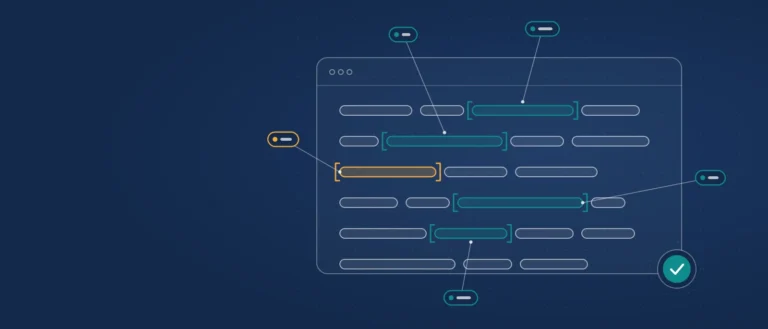
Yes, data annotation is legit: it is the real, paid work of labeling images, text, audio, and video so that artificial intelligence models can learn from them, and it powers a market that Grand View Research values at roughly USD 2.1 billion in 2026. The catch is that “legit” means two different things depending on who is asking. If you are a job seeker typing “is data annotation legit” into Google, you almost certainly want to know whether platforms like DataAnnotation.tech actually pay. If you run an AI team, you want to know whether outsourced labeling is trustworthy enough to train a production model. This guide answers both, with verified numbers, a side-by-side platform comparison, a scam-spotting checklist, and an original scorecard you can reuse.
Here is what you will get: a plain definition, the real pay rates from primary sources, the honest verdict on the most-searched platform, how to separate genuine work from fakes, and where this fits for a business that needs labeled data at scale.
At a Glance
| Question | Quick answer |
|---|---|
| Is data annotation legit? | Yes. It is legitimate paid work and a fast-growing industry (about 26.3% CAGR through 2030, per Grand View Research). |
| Is DataAnnotation.tech legit? | Yes, it is a real company (reportedly a Surge AI subsidiary) that pays via PayPal, with a 3.9 out of 5 Trustpilot score from nearly 2,000 reviews. |
| What does it pay? | The platform advertises roughly USD 25 to USD 30+ per hour for general work; ZipRecruiter reports an average near USD 22.84 per hour. |
| Are there fees to join? | No. Legitimate platforms never charge you to start. Any upfront fee is a red flag. |
| Is data annotation worth it? | For flexible side income, often yes. As a stable full-time salary, less reliable because work volume fluctuates. |
| How do businesses use it? | They hire managed, quality-controlled teams (like Graveiens AI) to label training data for AI models. |
Table of Contents
- What data annotation actually is
- So, is data annotation legit? The honest answer
- Is DataAnnotation.tech legit? The platform people mean
- How these platforms pay
- Types of data annotation work
- Legit data annotation platforms compared
- Legit or scam? How to tell
- The Graveiens LEGIT Scorecard
- Is data annotation worth it in 2026?
- A worked example: what a week really looks like
- How legit data annotation is done at scale
- FAQ
- About the authors
- Sources
What Data Annotation Actually Is
Data annotation is the process of adding labels to raw data so a machine learning model can recognize patterns in it. When you draw a box around a pedestrian in a dashcam photo, tag a customer review as “positive,” or transcribe a voice clip, you are annotating. The model does not learn from raw pixels or sound on its own. It learns from millions of human-made labels that tell it what it is looking at.
This is the quiet human layer underneath almost every AI product you use. A chatbot that answers well was shaped by people ranking its responses. A self-driving system that stops for cyclists was trained on frames that people outlined by hand. The industry term for this is human-in-the-loop: real people supplying the judgment that models cannot yet supply themselves.
Because demand for that judgment is exploding, so is the money behind it. Grand View Research puts the global data annotation tools market at about USD 1.0 billion in 2023, rising to a projected USD 5.3 billion by 2030, a compound annual growth rate of 26.3% over the forecast period. Text annotation led the category, and North America held the largest revenue share. That growth is exactly why “get paid to train AI” ads are everywhere, and why so many people now ask the same blunt question: data annotation, is it legit, or too good to be true?
So, Is Data Annotation Legit? The Honest Answer
Yes, data annotation is legit, both as an industry and as a way to earn money, but the quality of the experience varies widely by platform. The work itself is genuine and in high demand. Major AI labs pay specialist vendors to produce the labeled data that trains their models, and those vendors pay people to do the labeling. There is nothing fake about that supply chain.
Time magazine, reporting on the sector in 2024, described data annotation as “a legitimate avenue for earning money” while warning that the wider labeling industry is “poorly regulated” and “can be difficult to navigate.” Both halves of that sentence matter. The paycheck is real. The consumer protections around it are thin, which is why some workers have good experiences and others feel burned.
So, data annotation: is it legit for the average person? For most people, the honest answer is yes, with caveats. Phrased the blunter way people often search it, data annotation, is it legit or a scam: it is legit, but you still have to vet each platform. You will not get rich, work is not guaranteed week to week, and support can be slow. But the leading platforms are real businesses that pay real money for real tasks. The rest of this guide is about telling the good ones from the fakes and deciding whether the trade-off is worth it for you.
Is DataAnnotation tech Legit? The Platform People Mean
Yes, DataAnnotation.tech is a legitimate company that pays its workers, though the experience is inconsistent and worker support is a common complaint. When most people search “is data annotation legit,” this specific platform is what they have in mind, so it deserves a direct answer backed by evidence.
Here is what the primary sources show. According to Time magazine, DataAnnotation.tech is reportedly a subsidiary of Surge AI, a data-labeling provider whose clients have included Anthropic and Microsoft. That corporate backing matters: it is not a fly-by-night operation. On Trustpilot, the platform holds a 3.9 out of 5 “Great” rating across roughly 1,958 reviews as of August 2026, though the pattern is polarized, with about 55% of reviewers giving five stars and about 20% giving one star.
The one signal that looks alarming at first glance is the Better Business Bureau. DataAnnotation.tech carries an F rating, is not BBB accredited, and has had a small number of complaints filed. Read that in context. A BBB grade is driven heavily by whether a company pays to engage with the BBB and how it responds to complaints, not by whether it commits fraud. Plenty of real tech companies score poorly there simply because they ignore the BBB. Treat the F as a customer-service caution flag, not proof of a scam.
The real complaints from workers are more specific and more useful. Some report accounts being deactivated with unpaid balances still owed, and slow or absent responses when they dispute it. Work also arrives in unpredictable waves: a great week can be followed by a dry spell with almost no available tasks. None of that makes the platform a scam. It makes it an inconsistent employer, which is a different problem you can plan around. So for this specific platform, data annotation, is it legit? Yes, with an honest asterisk on consistency and support.
How These Platforms Pay
Legitimate data annotation platforms pay by the hour or by the task, deposit to services like PayPal, and never charge you to start. On DataAnnotation.tech specifically, the company’s own FAQ advertises starting rates of roughly USD 25 to USD 30+ per hour for general projects, USD 20+ per hour for multilingual work, and USD 50 to USD 100+ per hour for specialized coding, STEM, and professional tasks. Payments go out via PayPal within a few days of a withdrawal request, and the platform states it charges no signup fees and will “never ask for money from you for anything.”
Advertised rates and take-home pay are not the same thing, so weigh the independent numbers too. ZipRecruiter reports an average of about USD 22.84 per hour for “data annotation tech” work in the United States as of August 2026, with most reported pay falling between roughly USD 17 and USD 26 per hour. Time’s reporting cited around USD 20 per hour for general tasks and about USD 40 per hour for coding work. The gap between the “USD 100+” headline and the low-twenties average is not dishonesty; it reflects that top rates apply only to hard, specialized tasks, and that paid hours depend on how much work is available to you that week.
The practical takeaway: the money is real and paid promptly through PayPal, but your effective hourly rate depends heavily on your skills (coding and STEM pay far more) and on unpredictable task supply. Budget it as variable side income, not a fixed salary. So on the money question specifically, is data annotation legit? Yes: the pay is genuine and it reaches your account.
Types of Data Annotation Work
Data annotation covers several distinct kinds of tasks, and the type you qualify for largely decides your pay. Understanding the categories helps you set realistic expectations before you take an assessment.
The main types you will encounter are:
1. Text and language tasks, such as ranking two chatbot answers, writing model responses, checking factual accuracy, or classifying sentiment. This is the largest and most common category.
2. Image annotation, including drawing bounding boxes, polygons, or key points around objects, and classifying what an image contains. This is core to computer vision and object detection.
3. Video annotation, such as tracking an object across frames, labeling actions, or marking lane lines for driver-assistance systems.
4. Audio and speech tasks, including transcription, speaker identification, and tagging accents or emotion.
5. Specialized expert work in coding, mathematics, law, medicine, finance, or a specific language. These pay the most because they require verifiable expertise.
On worker platforms you usually take a short assessment (often about one hour, up to two for specialized subjects) to unlock a category. In a professional setting, the same task types are run by trained, managed teams with layered quality checks, which is the difference we cover later.
Legit Data Annotation Platforms Compared
The table below compares widely used, legitimate data annotation platforms. Pay figures are platform-advertised or worker-reported and vary by project, skill, and location, so treat them as ranges, not guarantees.
| Platform | Operated or backed by | Commonly reported pay | Payment method | Upfront fee | Reputation signal | Best fit |
|---|---|---|---|---|---|---|
| DataAnnotation.tech | Reportedly Surge AI | USD 20 to USD 100+ per hour by task type | PayPal | None | Trustpilot 3.9 of 5 (about 1,958 reviews) | Writers, coders, generalists wanting flexible hours |
| Outlier | Scale AI | Roughly USD 15 to USD 50+ per hour, higher for experts | PayPal | None | Large user base, mixed reviews on task supply | Domain experts and coders |
| Remotasks | Scale AI | Often lower, task-based micro-pay | PayPal, others | None | Established but variable | Entry-level image and video tasks |
| Appen | Appen Ltd (ASX listed) | Commonly lower, project dependent | PayPal, bank | None | Publicly traded, long track record | Search rating and localization projects |
| TELUS Digital | TELUS (NYSE, TSX listed) | Commonly reported around USD 14 per hour for rater roles | Direct deposit | None | Large public company | Search and social media evaluation |
| Prolific | Prolific (research platform) | Paid per study, recommended around USD 12 per hour | PayPal | None | Trusted by academic researchers | Surveys and research studies |
| Clickworker | Clickworker GmbH | Task-based, varies widely | PayPal, SEPA | None | Long-established crowdsourcing firm | Short micro-tasks and quick payouts |
The single most useful column is the one labeled upfront fee. Every legitimate platform in this table charges nothing to join. That one rule filters out most scams before you ever look at pay.
Also read: How to choose AI training data companies in 2026, a practical checklist for vetting a provider you can actually trust.
Legit or Scam? How to Tell
This is where the question gets specific: for any given offer, data annotation, is it legit, or a scam wearing the same clothes? The reliable way to tell a legit data annotation offer from a scam is to check who pays whom and how. A genuine platform pays you; a scam finds a way to get money or sensitive data out of you. Run any offer through this checklist before you sign up.
1. It never asks you to pay. No “starter kit,” training fee, software license, or deposit. If money flows from you to them, stop.
2. It pays through traceable methods. PayPal, direct deposit, or a known payroll provider. Requests to pay you in gift cards, cryptocurrency, or through a “reshipping” scheme are classic fraud.
3. It does not ask for banking logins or full financial credentials. A real platform needs a PayPal email or standard tax details, not your online banking password.
4. It has a verifiable footprint. A real website, findable reviews on Trustpilot or Reddit, and a traceable parent company. A brand-new domain with zero history is a warning sign.
5. It uses a real qualification test. Legit platforms make you pass an unpaid assessment. Scams often “hire” everyone instantly, because their goal is not your work.
6. The offer is specific, not too good to be true. “USD 90 per hour, no experience, start today, just pay a small onboarding fee” is a scam template. Real pay scales with real skill.
7. Communication is professional and consistent. Poor grammar, pressure to act immediately, and contact only through personal messaging apps are red flags.
If an offer clears all seven, it is very likely legitimate. If it fails even one, especially the first two, walk away.
The Graveiens LEGIT Scorecard
To make that judgment repeatable, we built a simple scoring tool you can apply to any platform in a couple of minutes. Score each of the five LEGIT factors from 0 to 2, then add them up.
| Factor | What to check | 0 points | 1 point | 2 points |
|---|---|---|---|---|
| L: Levies | Does it charge you anything? | Charges a fee | Vague about costs | Free to join, always |
| E: Evidence | Independent reviews and payment proof | None or fake | Thin or mixed | Hundreds of verifiable reviews |
| G: Governance | Real company, findable owner | Anonymous | Unclear parent | Known, traceable entity |
| I: Income clarity | Are pay terms transparent? | Hidden or “unlimited” | Vague ranges | Clear rates and payout method |
| T: Track record | History and payout reliability | Brand new | Under a year | Established, pays on schedule |
Read your total like this. A score of 8 to 10 means it is very likely legit and worth trying. A 5 to 7 means proceed with caution and start small. A 0 to 4 means do not sign up. Run DataAnnotation.tech through it and you land around 8: free to join, thousands of reviews, a traceable parent in Surge AI, clear PayPal payouts, and a multi-year track record, with a point shaved off for inconsistent support. That is the difference between “legit but imperfect” and “avoid.”
Is Data Annotation Worth It in 2026?
Whether data annotation is worth it depends on what you want from it: as flexible side income it often is, but as a dependable full-time salary it usually is not. The honest trade-offs are easy to state once you separate those two goals.
It is worth it if you want low-commitment, work-from-anywhere income you can pick up between other things, if you have a specialized skill like coding or a STEM background that unlocks the higher rates, or if you want a low-stakes way to understand how AI models are actually built. The barrier to entry is low, the work is genuine, and payment through PayPal is prompt.
It is a poor fit if you need a guaranteed number of hours each week, because task supply fluctuates and can dry up without notice. It is also underwhelming if you only qualify for general tasks and live somewhere pay rates are lower, since the effective hourly rate can fall well below the advertised headline. And if you dislike ambiguous instructions or slow support, the frustration may outweigh the flexibility.
A balanced approach beats an all-or-nothing one. Many people treat one or two annotation platforms as a supplementary income stream that fills gaps, rather than a primary job, and that framing is where the work tends to be genuinely worth it. Put simply, is data annotation worth it? For flexible, low-commitment income, usually yes; as a sole paycheck, usually no.
Also read: Will AI take my job? A data-backed 2026 guide on where annotation and adjacent AI work fit in a shifting job market.
A Worked Example: What a Week Really Looks Like
Both profiles below show why the answer to is data annotation legit is different from the answer to is data annotation worth it: the work pays, but how much is never fixed. These are illustrative scenarios, not promises.
Maya is a freelance writer who qualifies for general and writing tasks. In a good week she logs 12 active hours at an effective rate near USD 24 per hour, earning about USD 288. In a slow week, task supply drops and she finds only 4 hours of work, earning about USD 96. Her monthly total swings between roughly USD 400 and USD 1,000 depending entirely on availability. For her, it is a solid, flexible top-up on freelance income.
Dev is a software engineer who passes the coding assessment. His tasks pay closer to USD 55 per hour, and even at 8 hours in a week he earns about USD 440. Because specialized work is scarcer but far better paid, his ceiling is higher and his floor is more variable. For him, the platform is worth it specifically because his skill unlocks the top tier.
The pattern holds across the industry: your qualification level and the week’s task supply, not the advertised maximum, decide your pay.
How Legit Data Annotation Is Done at Scale
When a business needs labeled data it can actually ship a product on, the gig-platform model is the wrong tool; the right one is a managed, quality-controlled annotation team. This is the other half of the question is data annotation legit: not just legitimate for the worker earning from it, but trustworthy enough for the company buying it. It is the other meaning of “legit.” An individual asks whether a platform will pay them. A company asks whether the labels are accurate, secure, and consistent enough to train a model that real people will rely on. Those are very different bars.
The gap between a random crowd and a production dataset is quality control. A single unreviewed label is a guess. A trustworthy dataset comes from a layered process: trained annotators create the labels, internal reviewers check them, a client review stage catches edge cases, and anything wrong goes back for rework. At Graveiens AI, that is a four-stage QA workflow that holds post-QA accuracy around 98%, with a pay-on-approval model so clients only pay for labels that pass. This is the human-in-the-loop layer done as an accountable service rather than an anonymous gig.
That accountability is what separates a legitimate data partner from a cheap crowd. For teams that would rather build a trained team than gamble on an anonymous crowd, Graveiens AI provides managed data annotation services across image, video, text, audio, and 3D or LiDAR data, backed by ISO 9001:2017 certified processes, subject-matter experts, and support for 25+ languages. The unique promise is simple: you get a supervised team and pay only for work that clears QA, not a lottery of unvetted labelers.
Also read: Data annotation outsourcing: the complete 2026 guide for businesses deciding whether to build an in-house team or buy annotation as a service.
FAQ
Is data annotation legit?
Yes. Data annotation is legitimate paid work that labels data to train AI models, and it supports a market projected to reach USD 5.3 billion by 2030, according to Grand View Research. Leading platforms are real companies that pay real money, though work volume and support quality vary.
Data annotation: is it legit for beginners with no experience?
Yes, beginners can start with general text and image tasks, which need no formal experience, only careful attention and English fluency. You will typically pass a short unpaid assessment first. Pay for entry-level tasks is modest, and specialized skills unlock higher rates.
Is DataAnnotation.tech legit and does it really pay?
Yes. DataAnnotation.tech is a real company, reportedly a Surge AI subsidiary, that pays via PayPal and charges no fees to join. It holds a 3.9 out of 5 Trustpilot rating from nearly 2,000 reviews. The main downsides reported by workers are inconsistent task availability and slow support.
How much can you earn doing data annotation?
Platforms advertise roughly USD 20 to USD 100+ per hour depending on task type, but independent data from ZipRecruiter shows an average near USD 22.84 per hour in the United States. Specialized coding and STEM work pays the most; general tasks pay far less.
Is data annotation worth it as a full-time job?
For most people, no. It works best as flexible side income because task supply fluctuates week to week. People with in-demand skills like coding can earn more, but guaranteed full-time hours are rare on gig platforms.
Do legit data annotation platforms ever charge a fee to join?
No. Legitimate platforms never charge you to start, and they pay you rather than asking for money. Any upfront fee, “training kit” cost, or request for payment in gift cards or crypto is a clear scam signal.
What is the difference between a data annotation gig and a professional data annotation service?
A gig platform pays individuals to complete tasks with little oversight. A professional service, such as Graveiens AI, runs trained teams through multi-stage quality control to deliver accurate, secure, production-grade labeled data for businesses training AI models.
Data annotation, is it legit across every website that offers it?
No. The work is legitimate, but individual websites are not all trustworthy. Stick to established platforms with verifiable reviews and a traceable parent company, and reject any site that asks for an upfront fee or payment in gift cards or crypto.
Which data annotation platforms are the most legit?
Established options include DataAnnotation.tech, Outlier and Remotasks (both Scale AI), Appen, TELUS Digital, Prolific, and Clickworker. All are real companies that pay without upfront fees, though pay rates and task availability differ widely.
About the Authors
This guide was written by the Graveiens AI Content Team and reviewed by a Senior Data Operations Lead with over a decade of hands-on experience running annotation, transcription, and model-evaluation programs across automotive, healthcare, and finance projects. Graveiens AI is a human-in-the-loop data services company, ISO 9001:2017 certified, serving 350+ global clients with 700+ vetted experts and subject-matter specialists across 25+ languages. You can learn more about our team and standards on our About Us page.
Conclusion
So, is data annotation legit? Yes: it is real, paid, in-demand work, and the leading platforms are genuine companies that pay promptly through traceable methods. The nuance is that “legit” is not the same as “reliable income” or “always a good experience.” Treat gig platforms as flexible, variable side work, run every offer through the scam checklist and the LEGIT Scorecard, and never pay to start. And if your real question is data annotation worth it for you, judge it by your skills and your need for stable hours, not by the headline rate. If you are on the business side and need labeled data you can build a product on, the answer is a managed service, not a crowd. Graveiens AI delivers exactly that: a trained, supervised annotation team with ISO 9001:2017 certified quality control and a pay-on-approval model. Ready to talk through your project? Get in touch with our team for a scoped pilot.
Sources
- Grand View Research, Data Annotation Tools Market Size, Share and Growth Report. https://www.grandviewresearch.com/industry-analysis/data-annotation-tools-market
- Time, “Is Data Annotation Legit? What to Know About the Tech Jobs” (2024). https://time.com/6962608/data-annotation-legit-tech-jobs-ai/
- DataAnnotation.tech official FAQ (pay rates, payment method, fees). https://www.dataannotation.tech/faq
- Trustpilot, DataAnnotation reviews and TrustScore. https://www.trustpilot.com/review/dataannotation.tech
- Better Business Bureau, DataAnnotation.tech business profile. https://www.bbb.org/us/ny/schenectady/profile/information-technology-services/dataannotationtech-0041–236029433
- ZipRecruiter, Data Annotation Tech Salary (August 2026). https://www.ziprecruiter.com/Salaries/Data-Annotation-Tech-Salary

Jitendra Choubay is the CEO & Founder of Graveiens AI, leading a human-in-the-loop data services team that helps AI builders with data collection, annotation, consent-backed voice data, transcription and LLM fine-tuning. He writes on building better, ethically sourced AI training data.
Get the next Graveiens AI article
Expert notes on AI data, annotation, LLMs and eLearning — no spam, unsubscribe anytime.
Need AI Development? Data Annotation? eLearning?
Talk to Graveiens AI about data collection, annotation, voice data, RLHF/SFT, LLM evaluation and AI training data — invoiced only on approved work.
Contact Graveiens AI