Key Takeaways (TL;DR)
| Question | Short answer |
|---|---|
| What is an AI training data company? | A vendor that collects, labels, and quality-checks the text, image, audio, and video data used to train and fine-tune machine-learning models. |
| How big is the market? | Around $3.9 billion in 2026, on track for $16.3 billion by 2033 at roughly a 22.6% CAGR (Grand View Research). |
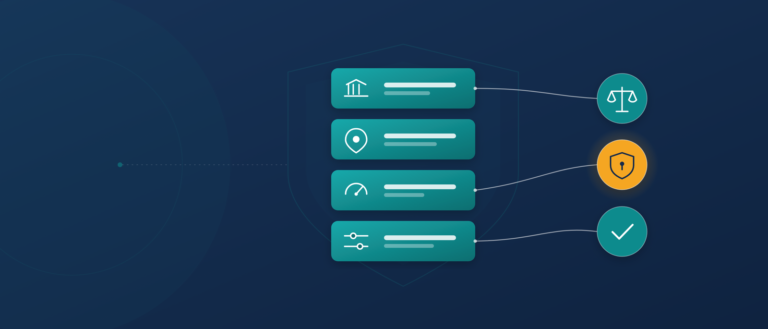
| What do the best ones offer? | Consent-backed sourcing, expert annotation, multilingual coverage, RLHF and SFT feedback, and measurable quality checks. |
| How much do they charge? | Managed labeling runs $6–$12/hour for standard work and $50–$100/hour for specialist domains; per-label pricing spans $0.01–$3+. |
| How do you pick one? | Judge them on data consent, subject-matter expertise, QA depth, language range, and pricing risk — not headcount alone. |
| Who is Graveiens AI? | An ISO 9001:2017-certified, human-in-the-loop data partner billing only for approved work. |
Every capable model starts with data someone had to gather, clean, and label by hand. That quiet groundwork is the job of ai training data companies the teams that turn messy, real-world signals into structured datasets a model can actually learn from. If your model hallucinates, misreads accents, or fumbles edge cases, the fix usually lives in the data, not the architecture. This guide compares the leading providers, breaks down pricing, and shows you how to choose a partner that holds up in production.
What are AI training data companies?
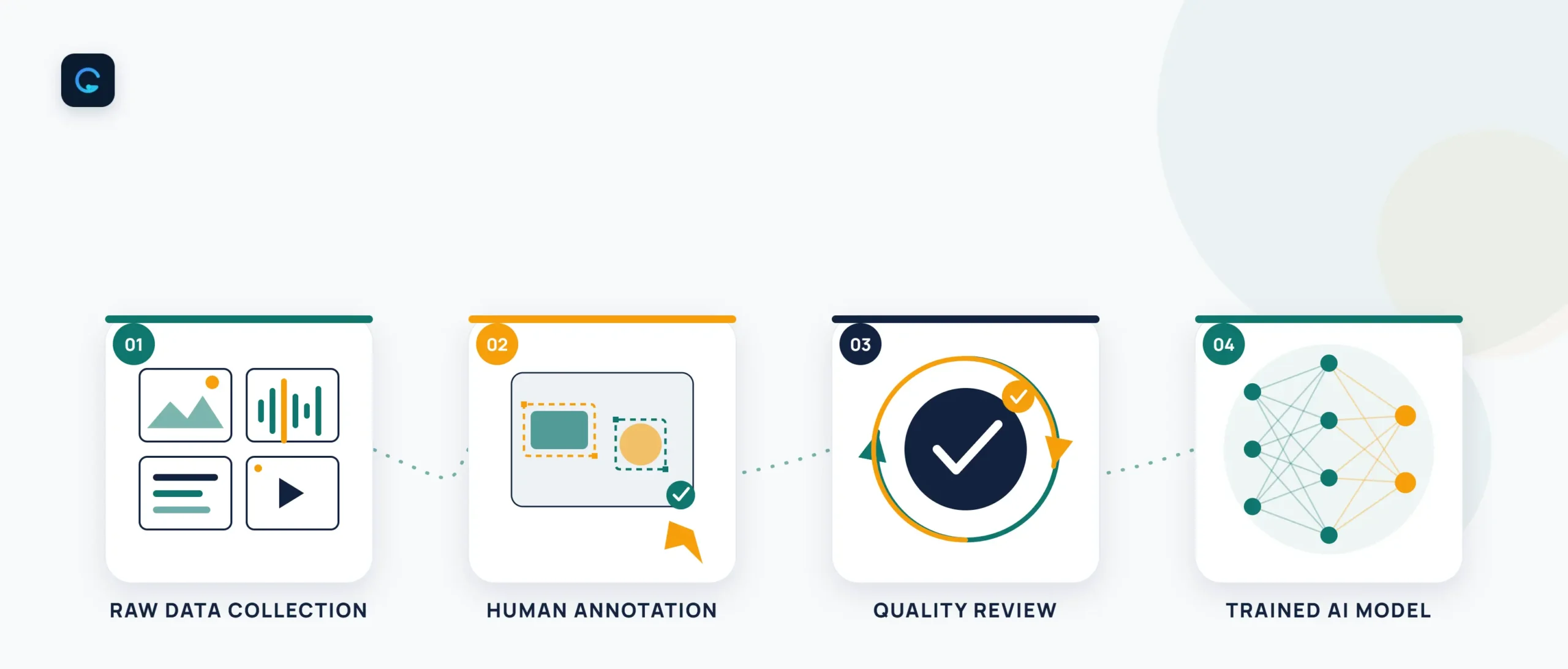
An AI training data company sources, annotates, and validates the examples used to teach machine-learning systems across text, image, audio, and video. It handles raw data collection, pixel- and token-level data annotation and labeling, and human feedback that aligns model behaviour usually through a human-in-the-loop quality process. In short, these providers are the supply chain behind every chatbot, perception system, and voice assistant.
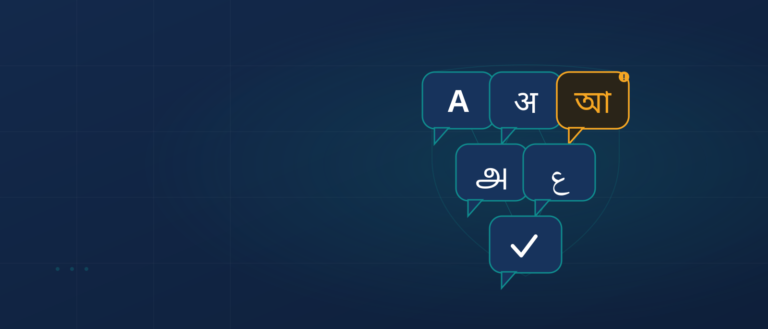
The category now stretches well beyond simple labeling into voice and speech data, audio transcription for ASR, LLM fine-tuning, and LLM evaluation with red-teaming.
The AI training data market in 2026
The market is growing fast. Grand View Research values the AI training dataset market at about $3.9 billion in 2026, rising to $16.3 billion by 2033 at a ~22.6% CAGR, and other analysts land in a similar 21–24% range. Four shifts are shaping demand this year:
- Synthetic data is now used alongside human data synthetic for scale and coverage, human for accuracy and edge cases.
- VLA (vision-language-action) models for robotics are driving demand for first-person, egocentric video capture.
- AI agents need multi-step trajectories and preference data, not just single-turn labels.
- Multimodal foundation models require aligned text, image, audio, and 3D sensor and LiDAR data from one accountable source.
Top AI training data companies compared (2026)
The table below summarises how six widely cited providers position themselves. Use it as a starting shortlist, then validate against your own modality and language needs.
| Provider | Best known for | Modalities | Notable strength |
|---|---|---|---|
| Scale AI | Enterprise & frontier-lab data | Text, image, video, 3D | Scale, tooling, model evaluation |
| Appen | Large global crowd | Text, speech, image | Breadth and language reach |
| TELUS Digital AI | Enterprise annotation & GenAI | Multimodal | Managed delivery at scale |
| Sama | Ethical, impact-sourced labeling | Image, video, LiDAR | Responsible sourcing focus |
| iMerit | Expert-in-the-loop annotation | Image, video, medical, geospatial | Domain specialist workforce |
| Graveiens AI | Consent-first, SME-reviewed data | Text, image, video, voice | ISO 9001:2017 QA; pay only for approved work |
Each has a different centre of gravity, so the “best” provider depends on your use case — perception data, conversational AI, or natural language processing.
How much do AI training data companies charge?
Pricing depends on modality, complexity, quality bar, and language. Managed annotation typically costs $6–$12 per hour for standard tasks and $50–$100 per hour for specialist work like medical labeling, while per-label pricing runs from about $0.01 to $3+ as complexity rises. Enterprise annual contracts with the largest platforms can range from roughly $93,000 to $400,000+.
| Pricing model | Typical range (2026) | Best for |
|---|---|---|
| Per hour (standard) | $6–$12 | Ongoing, mixed-task labeling |
| Per hour (specialist) | $50–$100 | Medical, legal, finance review |
| Per label / unit | $0.01–$3+ | High-volume, well-defined tasks |
| Project / pilot | Fixed scope | Testing quality before you commit |
A model where you are invoiced only for approved deliverables — as Graveiens AI runs it — keeps early pilots close to zero-risk. Volume discounts of 10–30% are common above 100k units.
How we evaluated these companies
To keep this guide useful and honest, we compared providers on the criteria that actually predict dataset quality, not marketing claims. Our review weighs five factors: data consent and provenance (explicit-consent onboarding and an audit trail), subject-matter expertise, quality-assurance depth (multi-stage review versus single-pass), language and modality coverage, and pricing risk. Where possible we cross-checked positioning against public market research and each vendor’s stated process. You can see the same standard applied to real work on the Graveiens AI case studies page, and the delivery workflow is documented on the process page.
Pros and cons of outsourcing AI training data
Outsourcing is not automatically right for every team. Here is the honest trade-off.
Pros: faster scaling without hiring, access to a specialist workforce and rare languages, mature QA tooling, and lower fixed cost when you pay per approved deliverable. A good partner also brings compliance discipline you would otherwise build from scratch.
Cons: you must invest time in clear guidelines, provenance can be unclear with cheaper crowd-only vendors, and sensitive data needs careful handling. The fix is to choose a partner with content moderation and data validation built into the pipeline, and to start with a small pilot.
What practices help most when training AI models with prompts?
When teams ask what practices are beneficial for training ai models with prompts, the answer is less about volume and more about signal quality. Start with prompts that mirror how real people ask — varied phrasing, genuine edge cases, and messy inputs. Pair each prompt with clearly ranked responses so the model learns which answer is better and why; this is the core of RLHF, the same human-feedback approach behind instruction-tuned models. Keep instructions specific, cover positive and negative examples, route hard prompts to domain experts, and version your prompt sets so improvements are measurable. Done well, prompt engineering and preference feedback turn a competent base model into one that is reliable and aligned.
Can you train an AI art model for free?
Yes — you can train ai art model free using open-source stacks and community datasets, which is a fair way to learn the workflow without a budget. Fine-tuning a diffusion model on your own images, running a LoRA on consumer hardware, or using free notebooks all work for experiments. The catch is data rights: free image sets often carry unclear licensing, so anything you plan to publish or sell needs rights-cleared, consent-backed material.
Case studies: what results look like
Anonymised examples of programmes our teams support, focused on measurable quality:
- Voice AI, multilingual speech — a voice-AI company needed consent-backed speech across several Indic and European languages. We onboarded artists, managed recording and metadata, and delivered accent-tuned audio through QA, ready for ASR training.
- Medical LLM evaluation — an enterprise fine-tuning a medical model needed qualified reviewers. Our SME bench scored responses against a strict rubric and wrote reference answers, lifting the signal in their preference data.
- Computer vision at scale — a perception team needed pixel-accurate labels on a large image and LiDAR set. We adapted tooling to their ontology and scaled computer vision annotation while holding a high post-QA accuracy bar.
10 questions to ask before hiring a vendor
- How is data consent captured and documented?
- What is your end-to-end QA workflow?
- Which languages and modalities do you cover in-house?
- Do you have domain SMEs for my field?
- How do you measure and report accuracy?
- What is your pricing model, and do I pay for rework?
- How do you handle sensitive or regulated data?
- Can you run a paid pilot before a full contract?
- Who owns the data and the IP?
- How quickly can you scale from pilot to production?
Work with a data partner built for accuracy
Graveiens AI is a human-in-the-loop generative AI and data services company that helps teams build, train, and evaluate models with ethically sourced training data. Every dataset runs through a four-stage QA workflow, backed by an ISO 9001:2017-certified team and a STEM-trained expert bench, and you are invoiced only for the deliverables you approve.
Ready to test the difference on your own data? Book a pilot or talk to our team about a sample annotation batch, a multilingual voice set, or an RLHF run.
Frequently Asked Questions
What are AI training data companies?
They are providers that collect, annotate, and validate the data used to train and fine-tune AI models across text, image, audio, and video — usually with a human-in-the-loop quality process that keeps datasets accurate and compliant.
Which AI training data providers are most popular in 2026?
Widely cited providers include Scale AI, Appen, TELUS Digital AI, Sama, iMerit, and specialist teams like Graveiens AI that focus on consent-backed, expert-reviewed datasets.
How big is the AI training data market?
Grand View Research estimates about $3.9 billion in 2026, growing to roughly $16.3 billion by 2033 at a ~22.6% CAGR, with most analysts placing growth in the 21–24% range.
How much does AI training data cost?
Managed labeling typically costs $6–$12 per hour for standard tasks and $50–$100 for specialist domains, while per-label pricing spans $0.01 to $3+. Pilots priced on approved deliverables let you test quality first.
What practices are beneficial for training AI models with prompts?
Use realistic, varied prompts, rank responses with human reviewers, cover edge cases, route hard tasks to domain experts, and version your prompt sets so improvements are measurable.
Can I train an AI art model for free?
Yes. Open-source tools let you train an AI art model free for learning and experiments, but use rights-cleared, consent-backed images for anything you plan to publish commercially.
What is the difference between synthetic and human training data?
Synthetic data is machine-generated for scale and coverage; human data captures accuracy, nuance, and edge cases. Most 2026 programmes blend both.
References & further reading
- Grand View Research — AI Training Dataset Market Size & Share Report, 2026–2033.
- ISO — ISO 9001:2015 Quality management systems.
- NIST — Artificial Intelligence Risk Management Framework (AI RMF 1.0).
- Ouyang et al., 2022 — Training language models to follow instructions with human feedback (InstructGPT, arXiv:2203.02155).
- Fortune Business Insights — AI Training Dataset Market growth forecast.

Jitendra Choubay is the CEO & Founder of Graveiens AI, leading a human-in-the-loop data services team that helps AI builders with data collection, annotation, consent-backed voice data, transcription and LLM fine-tuning. He writes on building better, ethically sourced AI training data.
Get the next Graveiens AI article
Expert notes on AI data, annotation, LLMs and eLearning — no spam, unsubscribe anytime.
Need AI Development? Data Annotation? eLearning?
Talk to Graveiens AI about data collection, annotation, voice data, RLHF/SFT, LLM evaluation and AI training data — invoiced only on approved work.
Contact Graveiens AI