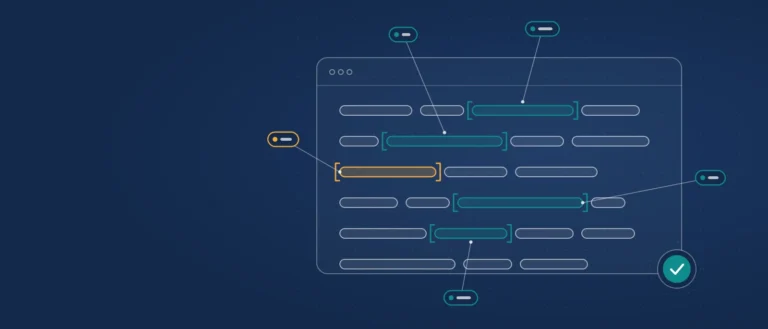
AI for fraud detection is the use of machine learning and related artificial intelligence models to spot fraudulent transactions, accounts, and behavior in real time by learning normal patterns and flagging anomalies that fixed rules miss. In plain terms, it is software that studies how your genuine customers behave, then quietly raises a hand when something does not fit.
This guide explains what the technology actually does, the main types in use today, how it compares with older rule-based methods, where it struggles, and a practical way to choose the right approach. You will also get an original readiness framework, a comparison table, a decision checklist, worked examples, and answers to the questions buyers ask most.
At a glance
| Question | Direct answer |
|---|---|
| What is AI for fraud detection? | Machine learning that scores transactions and behavior in real time, flagging anomalies that static rules miss. |
| Why does it matter now? | US consumers reported a record $12.5 billion in fraud losses in 2024, up 25% year over year, per the FTC. |
| How accurate is it? | Leading deployments report large gains: Mastercard says generative AI roughly doubled its detection rate for compromised cards. |
| AI vs traditional fraud detection? | Rules are fast and explainable but rigid; AI adapts to new patterns. Most mature teams run a hybrid of both. |
| Challenges of AI fraud detection? | Data quality, false positives, explainability, model drift, and adversarial or deepfake attacks. |
| What decides success? | The labeled data behind the model. Weak, biased, or thin training data caps accuracy no matter the algorithm. |
Table of contents
› What is AI for fraud detection?
› Why fraud detection needs AI now
› Types of AI for fraud detection
› AI vs traditional fraud detection
› When each approach wins
› Challenges of AI fraud detection
› The F.R.A.U.D. Readiness Scorecard (our framework)
› How to choose AI for fraud detection: a practical checklist
› Worked examples: before and after
› The data behind good fraud models
› FAQ
› About the authors
› Conclusion
› Sources
What is AI for fraud detection?
It is a set of machine learning models that learn the difference between legitimate and fraudulent activity from historical data, then score new events by how far they stray from normal.
A rule says “block any purchase over $5,000 from a new device.” A model instead learns hundreds of signals at once: the time of day, the typing cadence, the merchant category, the distance from the last login, the age of the account, and how these combine for this specific customer. It outputs a risk score, usually between 0 and 1, and your systems decide whether to approve, challenge, or block.
The important shift is from fixed thresholds to learned probability. Fraud patterns change weekly. A model retrained on fresh, well-labeled examples can catch a scheme that no analyst has written a rule for yet.
Why fraud detection needs AI now
The scale of loss is the short answer. According to the US Federal Trade Commission, consumers reported losing more than $12.5 billion to fraud in 2024, a 25% jump from the prior year, with investment scams alone accounting for $5.7 billion and imposter scams for $2.95 billion.
Card fraud sits on top of that. The Nilson Report put global payment card fraud losses at roughly $33 billion for 2024, and projects continued growth over the coming decade.
The newer pressure is that criminals now use AI too. Deloitte’s Center for Financial Services estimates that generative AI could push fraud losses in the United States to $40 billion by 2027, up from $12.3 billion in 2023, a compound annual growth rate of 32%. Deepfakes, synthetic identities, and machine-written phishing scale attacks that used to need a human. Static rules cannot keep pace with attacks that mutate this fast, which is why AI-driven fraud detection has moved from nice-to-have to baseline.
Types of AI for fraud detection
There is no single algorithm. Most production systems blend several of the following.
Supervised learning. Models such as gradient-boosted trees and logistic regression train on transactions already labeled fraud or legitimate. They are the workhorse for card and payment fraud where you have a clean history of confirmed cases.
Unsupervised and anomaly detection. When you lack labels, techniques like clustering, isolation forests, and autoencoders learn what normal looks like and surface outliers. This is useful for brand-new fraud types and for first-party fraud that has never been seen.
Deep learning and neural networks. These capture complex, nonlinear patterns and are common in real-time payment scoring and in reading unstructured inputs like documents or images.
Graph and network analysis. Fraud rings share devices, addresses, and accounts. Graph models expose those hidden links, which is how many teams catch mule networks and synthetic-identity clusters.
Natural language and behavioral models. These read chat, email, and voice for social-engineering and scam signals, and model typing rhythm, swipe patterns, and navigation as behavioral biometrics. Building them well depends on carefully labeled text and speech, the kind of work covered on our conversational AI and NLP data pages.
Computer vision for physical and document fraud. Not all fraud is digital. Self-checkout theft, refund abuse, and forged documents are caught with vision models. Training these to reason about human action from a first-person viewpoint often relies on egocentric video data, which teaches a model what a normal versus suspicious sequence of hand and product movements looks like at the point of sale.
AI vs traditional fraud detection
The core of the AI vs traditional fraud detection debate is adaptability versus control. Rule-based engines apply human-written if-then logic. They are transparent, instant to deploy, and easy for a compliance officer to explain. Their weakness is that they only catch what someone already thought to write down, and long rule libraries grow brittle and noisy.
AI models learn patterns from data, adapt to new schemes, and weigh many weak signals together, which typically lifts detection and lowers false positives. Their cost is complexity: they need quality training data, monitoring, and explainability tooling.
Here is a direct comparison across the factors that matter to a risk team.
| Factor | Traditional rule-based | AI for fraud detection |
|---|---|---|
| How it decides | Fixed if-then rules written by analysts | Learned patterns and probability scores from data |
| New fraud types | Misses until a rule is added | Can flag unseen anomalies |
| False positives | Often high as rules stack up | Lower when trained on good data |
| Explainability | High, easy to audit | Needs explainability tooling |
| Speed to deploy | Fast for simple cases | Slower, needs data and training |
| Maintenance | Manual rule upkeep | Retraining and monitoring |
| Data dependency | Low | High, quality of labels is decisive |
| Best fit | Clear, stable, regulated checks | High-volume, fast-changing fraud |
When each approach wins
Neither approach is universally better, and framing it as AI vs traditional fraud detection as a winner-take-all contest is a mistake. The honest answer is that they solve different problems.
Rules win when the check is clear-cut, stable, and legally required. Blocking transactions from sanctioned countries, enforcing a hard velocity limit, or applying a regulatory threshold is best done with an explicit rule you can point to in an audit.
AI wins when fraud is high-volume, fast-changing, and hidden in combinations of weak signals. Real-time card authorization, account-takeover scoring, and new-account fraud all reward a model that learns.
For many teams the strongest setup is a hybrid: deterministic rules handle the non-negotiable checks and known bad actors, while machine learning scores the gray area in between and feeds newly confirmed cases back into training. Mastercard, for example, reports that adding generative AI to its network roughly doubled the detection rate for compromised cards and sharply increased the speed of spotting at-risk merchants, running alongside its existing controls rather than replacing them.
Challenges of AI fraud detection
The challenges of AI fraud detection are mostly about data, trust, and adversaries, not about the math.
False positives. An overzealous model declines good customers, and every wrongly blocked payment costs revenue and goodwill. Tuning the score threshold is a constant balance between catching fraud and letting genuine users through.
Data quality and bias. A model is only as good as its labels. Mislabeled, thin, or skewed training data bakes in blind spots, and a model trained mostly on one customer segment can unfairly flag another. This is the single most underrated of the challenges of AI fraud detection.
Explainability and regulation. In banking, you often must explain why a customer was declined. Black-box models complicate audits and adverse-action requirements, so explainability tooling is not optional.
Model drift. Behavior shifts, new products launch, fraud tactics evolve, and accuracy quietly decays. Without retraining on fresh labels, a strong model degrades within months.
Adversarial and deepfake attacks. Fraudsters probe models, mimic legitimate behavior, and use synthetic media to defeat identity checks. The same generative tools defenders use are available to attackers, which keeps this an arms race.
The F.R.A.U.D. Readiness Scorecard (our framework)
Buyers often ask whether they are ready for a model at all. To answer that repeatably, we use a simple scorecard. Rate each dimension from 1 (weak) to 5 (strong). A total under 15 means fix your data and rules first; 15 to 20 means pilot on one use case; above 20 means scale.
| Key | Dimension | The question to ask | What a 5 looks like |
|---|---|---|---|
| F | Feeds | Do we have clean, labeled historical fraud data? | Years of confirmed, well-labeled cases across channels |
| R | Rules coverage | Are the obvious, stable checks already automated? | Deterministic rules handle known bad actors reliably |
| A | Adaptivity | Can we retrain as fraud shifts? | A pipeline to relabel and retrain on fresh cases |
| U | Understandability | Can we explain a decline to an auditor? | Score reasons available for every flagged event |
| D | Detection latency | Can we score in the time the decision needs? | Real-time scoring within the transaction window |
The pattern we see most often is a high R and a low F: teams have plenty of rules but not enough clean, labeled data to train a model that beats them. That is a data problem, not an algorithm problem, and it is fixable.
How to choose AI for fraud detection: a practical checklist
Use this order when you evaluate a build or a vendor.
1. Define the fraud you are fighting. Card, account takeover, new-account, refund abuse, and scam types each need different data and models.
2. Audit your data honestly. Count how many confirmed, labeled fraud cases you actually have, and check how they were labeled.
3. Set the cost of a mistake. Decide what a false decline and a missed fraud each cost you, because that sets your score threshold, not the vendor.
4. Choose the model to the problem. Use supervised models where you have labels, anomaly detection where you do not, and graph analysis for rings.
5. Demand explainability. Require reason codes for every decision so you can meet audit and adverse-action rules.
6. Plan the retraining loop before launch. Agree who relabels new cases and how often the model is refreshed.
7. Run a hybrid pilot. Keep rules for the non-negotiables, let the model score the gray area, and measure lift against your current baseline.
8. Measure the right metrics. Track precision, recall, false-positive rate, and dollars saved, not raw accuracy, which is misleading on imbalanced data.
Worked examples: before and after
Example 1, card payments. Before: a rule declines every foreign transaction over $300, blocking thousands of traveling customers and still missing local fraud. After: a model scores each purchase on device, history, and merchant risk, approving a genuine traveler in Lisbon while declining a same-city test charge from a freshly registered device. Fewer good customers blocked, more real fraud caught.
Example 2, new-account fraud. Before: analysts chase applications one by one. After: a graph model links twelve “different” applicants sharing one device fingerprint and two recycled phone numbers, exposing a synthetic-identity ring in minutes instead of weeks.
Example 3, refund abuse in retail. Before: staff eyeball returns and miss coordinated abuse. After: a vision model trained on point-of-sale video flags a repeated pattern of scanned-but-not-bagged items, turning a vague suspicion into a reviewable, evidence-backed alert.
The data behind good fraud models
Here is the part most articles skip: the model is the easy part. The accuracy ceiling is set by the labeled data underneath it. A boosted tree and a neural network trained on the same weak labels will both underperform, and no amount of tuning fixes bad ground truth.
Strong fraud data has three properties. It is accurately labeled by people who understand financial context, so an ambiguous transaction is tagged correctly rather than guessed. It is representative, covering the channels, geographies, and customer segments you actually serve. And it is refreshed, because last year’s fraud is not this year’s.
This is the work Graveiens AI does for banking and finance teams: transaction and behavior labeling, anomaly and pattern annotation for fraud and AML models, and KYC document extraction, delivered by finance subject-matter experts through a four-stage quality workflow that reaches 98% post-QA accuracy. You can see the full scope on our banking and finance page, and how we structure data annotation and data validation so labels hold up in an audit. For teams standing up entirely new detection models, our data collection and computer vision services build the training sets from scratch.
What we uniquely offer is a compliance-first pipeline: PII controls, audit trails, and a pay-on-approval model where you invoice only approved deliverables, so quality is our risk to carry, not yours.
Also read: Content Moderation Services in 2026 for the trust-and-safety side of the same problem, and Is Data Annotation Legit? for an honest look at how labeling quality is actually produced.
FAQ
What is AI for fraud detection in simple terms?
It is software that learns how your genuine customers normally behave and flags activity that does not fit, scoring each transaction for risk instead of relying only on fixed rules.
Is AI fraud detection better than traditional rules?
It is better at catching new and complex fraud, while rules are better for clear, stable, auditable checks. Most mature teams combine both in a hybrid system rather than choosing one.
AI vs traditional fraud detection: which is more accurate?
On high-volume, fast-changing fraud, a well-trained model usually detects more and produces fewer false positives. On simple, fixed checks, a rule is equally accurate and easier to explain. Accuracy depends on the problem and the training data.
What are the biggest challenges of AI fraud detection?
Data quality, false positives, explainability for regulators, model drift as behavior changes, and adversarial or deepfake attacks that try to fool the model.
How much fraud does AI actually prevent?
Results vary by deployment, but published figures are large. Mastercard reports that generative AI roughly doubled its detection rate for compromised cards while speeding up identification of at-risk merchants.
Does AI fraud detection need a lot of data?
Yes. Supervised models need many confirmed, well-labeled examples. Where labels are scarce, anomaly detection helps, but quality labeled data remains the biggest driver of performance.
Can fraudsters beat AI fraud detection?
They try constantly, using synthetic identities and deepfakes, which is why models must be monitored, retrained, and paired with strong identity checks. It is an ongoing arms race, not a one-time fix.
Is AI fraud detection worth it for smaller institutions?
Often yes, through vendors and shared models, but only if the underlying data is sound. Start with one high-value use case, prove lift against your current baseline, then expand.
About the authors
This guide was produced by the Graveiens AI Editorial Team and reviewed by a senior Financial AI Data Lead with over a decade of experience building labeled datasets for banking, fraud, and KYC models. Graveiens AI is an ISO 9001:2017 certified data services company working with 350-plus clients across 25 languages. Learn more on our about us page.
Conclusion
AI for fraud detection has become a baseline defense because fraud now moves faster than any static rulebook, and the criminals have their own AI. The winning pattern is rarely all-or-nothing: keep deterministic rules for the clear, regulated checks, add machine learning to score the gray area, and, above all, invest in the labeled data that decides how well any model performs.
If your models are only as good as the data behind them, that is where to start. Talk to our team about building fraud, AML, and KYC training data that holds up in production and in audit: visit our contact page or browse case studies of the work.
Sources
• Federal Trade Commission, “New FTC Data Show a Big Jump in Reported Losses to Fraud to $12.5 Billion in 2024” (March 2025). https://www.ftc.gov/news-events/news/press-releases/2025/03/new-ftc-data-show-big-jump-reported-losses-fraud-125-billion-2024
• Deloitte Center for Financial Services, “Generative AI is expected to magnify the risk of deepfakes and other fraud in banking”. https://www.deloitte.com/us/en/insights/industry/financial-services/deepfake-banking-fraud-risk-on-the-rise.html
• Mastercard, “Mastercard accelerates card fraud detection with generative AI technology” (May 2024). https://www.mastercard.com/us/en/news-and-trends/press/2024/may/mastercard-accelerates-card-fraud-detection-with-generative-ai-technology.html
• The Nilson Report, “Card Fraud Losses Worldwide 2024”. https://nilsonreport.com/articles/card-fraud-losses-worldwide-2024/

Jitendra Choubay is the CEO & Founder of Graveiens AI, leading a human-in-the-loop data services team that helps AI builders with data collection, annotation, consent-backed voice data, transcription and LLM fine-tuning. He writes on building better, ethically sourced AI training data.
Get the next Graveiens AI article
Expert notes on AI data, annotation, LLMs and eLearning — no spam, unsubscribe anytime.
Need AI Development? Data Annotation? eLearning?
Talk to Graveiens AI about data collection, annotation, voice data, RLHF/SFT, LLM evaluation and AI training data — invoiced only on approved work.
Contact Graveiens AI